United States
Water in the house. One call, and four things to do first.
Shut the water off, kill power to the wet rooms, photograph everything before you move it, and get the material drying. Your policy asks you to stop the damage growing while the claim is still open — which is why drying starts before anyone has decided anything.
(888) 217-5292 Call a contractorConnects you with an independent contractor about new work. Calls may be recorded.
Four numbers that decide most of it
The same in every state, and almost nobody is told them before they need them.
EPA counts from the moment materials get wet, not from when you notice.
Below that EPA says most homeowners handle it. Above it, containment is the job.
None, anywhere in the country. Rising water is a separate NFIP policy.
Bought today, it answers for nothing until the waiting period is over.
Hours 0–48
Water damage
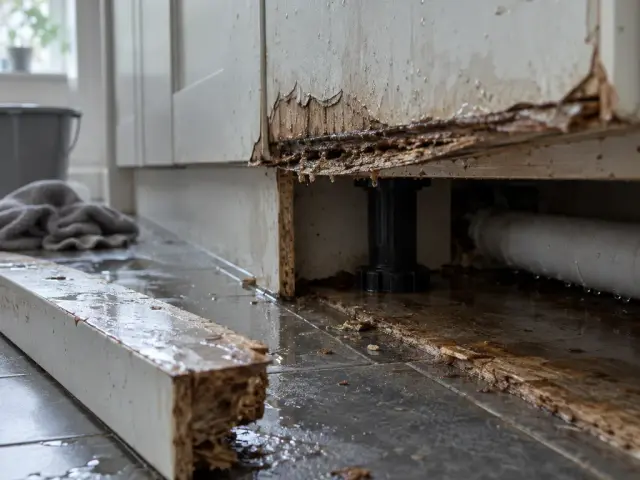
A burst supply line is two jobs, not one. A plumber replaces the pipe; a restoration crew dries the wall and whatever is behind it. Standard homeowners wording pays for the damage the water did and not for the part that failed, which is why the two invoices are answered differently — and why people who call only a plumber are surprised a month later.
Burst pipe · water heater · washing machine hose · dishwasher · toilet overflow · sewage backup · ceiling leak from upstairs · sump pump failure.
Connects you with an independent contractor about new work. Calls may be recorded.
Weeks later
Mold
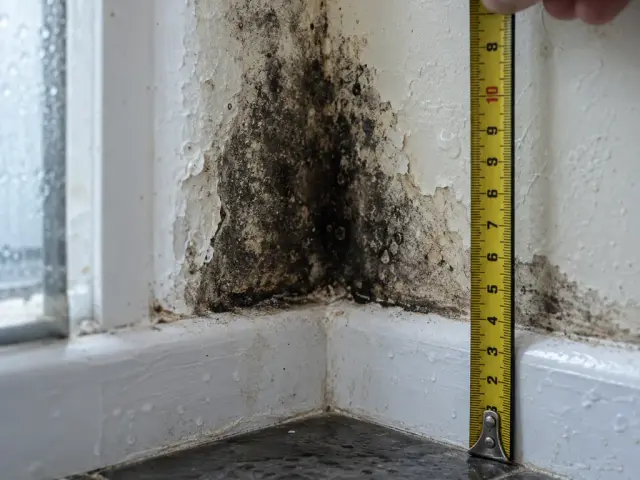
Two questions settle whether you need anyone at all: how large, and whether you own the place. EPA puts the do-it-yourself line at about ten square feet; CDC does not recommend testing when growth is already visible. In New York, Florida and Texas the company that assesses may not be the company that removes — so “we’ll test it and take care of it” describes something that is not lawful there.
What happens when you call
- 01You say what happened, when it started, and whether water is still moving. Three facts; the rest waits.
- 02The call goes to an independent contractor covering your area. Nothing is scheduled until you agree to it.
- 03Someone comes out, reads moisture in the materials, and says what has to come out and what can be dried in place.
- 04You sign for the drying work, or you do not. The contractor is not your insurer and cannot negotiate your claim for you.
Connects you with an independent contractor about new work. Calls may be recorded.
Your state
Flood zone, how many neighbours actually carry flood cover, humidity, frost, and who may legally do mold work — county by county.
- Alabama
- Alaska
- Arizona
- Arkansas
- California
- Colorado
- Connecticut
- Delaware
- District of Columbia
- Florida
- Georgia
- Hawaii
- Idaho
- Illinois
- Indiana
- Iowa
- Kansas
- Kentucky
- Louisiana
- Maine
- Maryland
- Massachusetts
- Michigan
- Minnesota
- Mississippi
- Missouri
- Montana
- Nebraska
- Nevada
- New Hampshire
- New Jersey
- New Mexico
- New York
- North Carolina
- North Dakota
- Ohio
- Oklahoma
- Oregon
- Pennsylvania
- Rhode Island
- South Carolina
- South Dakota
- Tennessee
- Texas
- Utah
- Vermont
- Virginia
- Washington
- West Virginia
- Wisconsin
- Wyoming